












Gone are the days of bulky plastic boxes and physical discs stacked on shelves. Today, digital distribution has changed how we buy our favorite entertainment titles. Most players now use unique strings of characters to unlock software instantly on platforms like Steam or Epic.
Understanding game activation represents the primary step toward a seamless playing experience. These special keys serve as your official proof of purchase. They ensure that you own a legitimate copy while keeping your account safe from fraud.
Maintaining high protection standards remains vital for developers and players alike. This guide explores the logic behind these modern systems and their impact on the global market. We will look at the tech behind the scenes and why these methods are essential.
The industry moves fast, and staying informed helps you protect your virtual library. By learning the basics of this process, you can shop with confidence across various online storefronts. Our detailed overview covers everything from code creation to final login checks.
Key Takeaways
- The transition from physical media to online software delivery.
- How validation codes verify legal ownership of a product.
- The role of major platforms in managing user licenses.
- Modern methods used to prevent unauthorized access and piracy.
- Benefits of instant access through virtual storefronts.
- Tips for maintaining high security for your personal library.
What Are Digital Game Keys?
Understanding digital game keys is crucial for navigating today’s gaming landscape. Digital game keys have become an essential part of the gaming industry, serving as a unique code that unlocks a specific game or content on various gaming platforms.
Definition and Basic Concept
A digital game key is essentially a unique alphanumeric code that is used to activate a game on a particular gaming platform. This code is usually provided by the game publisher or an authorized retailer and is required to download or play the game.
The basic concept behind digital game keys is to provide a secure and efficient way to distribute games without the need for physical media. This method has become increasingly popular due to its convenience and the ability to instantly access games.
The Evolution from Physical to Digital Distribution
The gaming industry has witnessed a significant shift from physical to digital distribution over the years. Initially, games were sold as physical copies in stores, but with the advancement of technology and internet connectivity, digital distribution became more prevalent.
This evolution has been driven by the convenience and flexibility offered by digital game keys. Gamers can now purchase and download games directly to their devices without the need to visit a physical store.

Types of Digital Game Keys Available Today
There are several types of digital game keys available, catering to different gaming platforms and distribution models. Some of the most common types include:
- Platform-specific keys (e.g., Steam, Epic Games Store)
- DRM-free keys
- Subscription-based keys (e.g., Xbox Game Pass)
| Type of Key | Description | Platforms Supported |
|---|---|---|
| Platform-specific keys | Keys that are specific to a particular gaming platform | Steam, Epic Games Store, Origin |
| DRM-free keys | Keys that allow game ownership without digital rights management restrictions | GOG, Some Steam games |
| Subscription-based keys | Keys that provide access to games as part of a subscription service | Xbox Game Pass, PlayStation Now |
Understanding these different types of digital game keys is essential for gamers to make informed purchasing decisions and to navigate the complex landscape of digital game distribution.
How Digital Game Keys Work
Behind every digital game key lies a sophisticated technical infrastructure that facilitates its generation, management, and tracking. This complex system ensures that each key is unique and secure, providing a seamless experience for gamers.
The Technical Foundation of Key Generation
Digital game keys are generated using advanced algorithms that create a unique string of characters for each key. This process involves combining various data points, such as the game’s identifier, the publisher’s code, and a random number generator to ensure uniqueness.
The key generation process is typically handled by the game publisher or developer, who use specialized software to create batches of keys. These keys are then stored in a database for later distribution through various channels.
Algorithmic Creation and Unique Identification Systems
The algorithmic creation of digital game keys involves complex mathematical formulas that produce a virtually unlimited number of unique combinations. These algorithms are designed to prevent duplication and ensure that each key can be traced back to its origin.
Unique identification systems play a crucial role in managing digital game keys. Each key is associated with a specific game title, and sometimes with additional information such as the region or language version. This information is stored in a database and used to verify the key during the activation process.

Database Management and Tracking Infrastructure
Effective database management is critical for tracking digital game keys throughout their lifecycle. The database stores information about each key, including its status (e.g., unused, activated, or revoked), the date it was generated, and the user who activated it.
| Key Status | Description | Action Taken |
|---|---|---|
| Unused | The key has been generated but not yet activated. | Stored in database, ready for distribution. |
| Activated | The key has been successfully used to activate a game. | Linked to user’s account, marked as activated. |
| Revoked | The key has been invalidated due to fraud or other issues. | Marked as revoked, cannot be used. |
This infrastructure allows game publishers to monitor key usage, detect fraudulent activity, and ensure compliance with licensing agreements.
The Game Key Activation Process Explained
The activation of a digital game key is a multi-step process designed to verify the authenticity of the game and assign a license to the user’s account. This process is crucial for ensuring that the game is legitimate and ready for use on the user’s preferred gaming platform.
Step-by-Step Activation Walkthrough
Activating a digital game key involves several straightforward steps.
- The user purchases a digital game key from an authorized retailer.
- The user receives the key via email or in their account on the retailer’s website.
- The user then navigates to their gaming platform (e.g., Steam, Epic Games Store) and selects the option to redeem a key.
- The user enters the key, and the platform checks its validity.
Server Verification and Authentication Protocols
Server verification is a critical component of the game key activation process. When a user attempts to activate a key, the gaming platform’s servers check the key against a database to verify its legitimacy. This involves complex authentication protocols to ensure the key is genuine and has not been used before.
License Assignment to Your User Account
Once the key is verified, the gaming platform assigns a license to the user’s account. This license grants the user the right to play the game on the associated platform. The license is typically tied to the user’s account and is not transferable.
| Step | Description |
|---|---|
| 1. Purchase Key | Buy a digital game key from an authorized retailer. |
| 2. Receive Key | Receive the key via email or through your account. |
| 3. Redeem Key | Go to your gaming platform and select the redeem key option. |
| 4. Enter Key | Enter the key, and the platform checks its validity. |
| 5. License Assignment | The platform assigns a license to your account upon successful verification. |
Where Digital Game Keys Come From
Understanding where digital game keys come from requires a look into the gaming industry’s ecosystem. The distribution of these keys involves a complex network of stakeholders, each playing a crucial role in ensuring that gamers can access their desired titles.
Publishers and Developers as Primary Sources
Publishers and developers are the primary sources of digital game keys. They create and distribute games through various channels, including their own platforms and authorized retailers. As Tim Sweeney, Epic Games’ CEO, once noted, “The digital distribution model allows us to get games directly to consumers, bypassing traditional retail channels.” This direct-to-consumer approach has revolutionized the gaming industry.
Developers often work closely with publishers to ensure that their games are widely available. Together, they generate game keys for distribution through multiple channels.
Authorized Retailers and Distribution Channels
Authorized retailers play a vital role in the distribution of digital game keys. They purchase keys from publishers or developers and sell them to consumers. Examples include online stores like Steam, Epic Games Store, and GOG. These retailers often have agreements with publishers to sell game keys at competitive prices.
As stated by a Steam spokesperson, “We work closely with publishers to ensure that our customers have access to a wide range of games.” This collaboration is essential for maintaining a diverse game library.
Key Bundles and Subscription Services
Key bundles and subscription services have become increasingly popular. These services offer gamers access to multiple titles for a flat monthly fee. For instance, services like Xbox Game Pass and PlayStation Now provide subscribers with a vast library of games.
“Subscription services are changing the way people consume games, offering flexibility and value,” said a gaming industry analyst.
Key bundles, on the other hand, involve packaging multiple game keys together, often at a discounted price. This strategy is used to promote game sales and clear inventory.
Major Gaming Platforms and Their Key Systems
The landscape of digital game distribution is dominated by several major platforms with distinct key systems. These platforms have developed unique infrastructures to manage the distribution, activation, and management of digital game keys.
Steam Keys and Valve’s Infrastructure
Steam, operated by Valve Corporation, is one of the largest digital distribution platforms for PC games. Steam keys are generated and managed through Valve’s proprietary system, ensuring secure and efficient game activation. The Steam client software is designed to authenticate game keys and grant access to the associated game library.
Key Features of Steam’s System:
- Automatic game activation upon purchase
- Cloud saving and game library management
- Regular updates and community features
Epic Games Store Activation System
Epic Games Store is a relatively new entrant in the digital distribution market but has quickly gained popularity. Its activation system is designed to be user-friendly and secure, ensuring that game keys are validated quickly.
Epic Games Store’s key features include:
- A more generous revenue share for developers compared to other platforms
- Exclusive titles to attract users
- A streamlined activation process for purchased games
GOG Galaxy and DRM-Free Keys
GOG Galaxy is a platform that focuses on DRM-free games, offering users the freedom to play their games without the need for online activation or constant internet connectivity. GOG keys are provided for game activation within the GOG Galaxy client.
GOG Galaxy’s unique aspects:
- DRM-free game distribution
- A curated selection of games, often with a focus on classics and indie titles
- A community-driven approach to game discovery and sharing
Origin, Uplay, and Battle.net Platforms
Other major gaming platforms include Origin (EA’s digital distribution platform), Uplay (Ubisoft’s platform), and Battle.net (Blizzard’s platform). Each of these platforms has its own key system for game activation and management.
Here’s a comparison of these platforms and their key features:
| Platform | Key Features | DRM Requirements |
|---|---|---|
| Steam | Large community, automatic updates, cloud saves | Online activation required |
| Epic Games Store | Competitive revenue share, exclusive titles | Online activation required |
| GOG Galaxy | DRM-free, curated game selection | No DRM |
| Origin | EA’s game library, online multiplayer features | Online activation required |
| Uplay | Ubisoft’s game library, Uplay+ subscription | Online activation required |
| Battle.net | Blizzard’s game library, secure authentication | Online activation required |
Security Measures Protecting Digital Game Keys
The digital gaming industry relies heavily on robust security measures to protect game keys from unauthorized access and fraudulent activities. These measures are crucial for maintaining the integrity of gaming platforms and ensuring that game keys are used as intended.
Encryption and Key Protection Technologies
Encryption plays a vital role in protecting digital game keys. Advanced encryption algorithms are used to secure game keys both during transmission and storage. This ensures that even if unauthorized parties gain access to the keys, they will be unable to decipher or use them without the decryption key.
Key protection technologies involve a combination of hardware and software solutions designed to safeguard game keys. These technologies include secure key storage solutions, such as Hardware Security Modules (HSMs), which are dedicated hardware devices designed to securely store, process, and manage cryptographic keys.
Region Locking and Geographic Restrictions
Region locking is another security measure used to control the distribution and use of digital game keys. By restricting game keys to specific geographic regions, publishers can manage game releases, pricing, and content more effectively. This helps in preventing unauthorized global distribution of games and ensures compliance with regional regulations.
Region locking can be implemented through various methods, including IP address verification, account region settings, and console or platform restrictions. While this measure can be inconvenient for some users, it is an effective way to enforce regional content policies.
| Region Locking Method | Description | Effectiveness |
|---|---|---|
| IP Address Verification | Verifies the user’s IP address to determine their geographic location. | High |
| Account Region Settings | Requires users to set their account region, which determines the available content. | Medium |
| Console/Platform Restrictions | Some consoles or platforms are restricted to specific regions, limiting game key usage. | High |
Anti-Fraud Detection Systems
Anti-fraud detection systems are critical in identifying and preventing fraudulent activities related to digital game keys. These systems use advanced algorithms and machine learning techniques to monitor transactions, user behavior, and other indicators to detect suspicious activity.
When suspicious activity is detected, these systems can trigger various responses, such as flagging the transaction for review, temporarily suspending user accounts, or blocking access to the game key. This proactive approach helps in minimizing the impact of fraud on both the gaming industry and consumers.
Effective anti-fraud measures not only protect game keys but also enhance the overall security posture of gaming platforms. By continuously updating and refining these systems, the gaming industry can stay ahead of emerging threats and maintain a secure environment for gamers.
Common Security Risks and Scams to Avoid
The world of digital game keys is not without its dangers, with several security risks and scams that gamers need to be cautious about. As the gaming industry continues to grow, so does the sophistication of scams targeting gamers.
Understanding these risks is crucial to ensuring a safe and enjoyable gaming experience. Below, we’ll explore some of the most common security risks associated with digital game keys.
Key Reselling Gray Markets
The gray market for digital game keys has become a significant concern. These markets often involve the resale of keys obtained through various means, sometimes legitimately but often not. Gray market keys can be risky because they may be revoked by game publishers if discovered.
Gamers should be cautious when purchasing keys from resellers, as there’s no guarantee that the key is legitimate or won’t be revoked in the future.
Fraudulent Key Generators and Scams
Some scammers create fraudulent key generators that promise free or discounted game keys. These generators often lead to malware infections or are outright scams designed to steal personal and financial information.
Gamers should be wary of websites or services offering keys that seem too good to be true, as they likely are.
Stolen or Revoked Keys
Keys can be stolen through various means, including data breaches or phishing attacks. Stolen keys are then sold on black markets or used for malicious purposes.
Revoked keys are another issue; these are keys that have been disabled by the publisher or platform due to suspected fraudulent activity.
Phishing Attempts Targeting Gamers
Phishing attempts are a common threat, where scammers try to trick gamers into revealing their login credentials or other sensitive information. These attempts can come in the form of emails, messages, or fake websites designed to mimic legitimate gaming platforms.
Gamers must be vigilant and verify the authenticity of any communication that asks for personal or financial information.
How to Safely Purchase Digital Game Keys
As digital games continue to gain popularity, knowing how to safely purchase game keys is crucial for gamers. The convenience of digital distribution has made it easier than ever to access a vast library of games, but it also comes with risks. To ensure a safe and enjoyable gaming experience, it’s essential to understand the best practices for buying digital game keys.
Identifying Authorized Retailers
One of the most critical steps in safely purchasing digital game keys is to identify authorized retailers. Authorized retailers are officially sanctioned by game developers or publishers to sell their products. To verify a retailer’s authenticity, look for the following:
- Official Website: Check if the retailer is listed on the game’s official website or the platform’s (e.g., Steam, Epic Games Store) store.
- Customer Reviews: Research the retailer’s reputation through customer reviews and ratings on multiple platforms.
- Contact Information: Legitimate retailers will have clear contact information, including a physical address and customer support.
Warning Signs of Suspicious Sellers
Being aware of the warning signs of suspicious sellers can save you from potential scams. Some red flags include:
- Too Good to Be True Prices: If the price is significantly lower than other retailers, it may be a scam.
- Lack of Transparency: Be wary of sellers who are unclear about their business practices or contact information.
- Poor Customer Service: Legitimate retailers will have responsive customer service.
Payment Protection and Buyer Rights
Understanding payment protection and buyer rights is vital when purchasing digital game keys. Many payment methods, such as credit cards, offer some level of buyer protection. Additionally, reputable retailers will have policies in place to protect buyers, such as:
- Refund Policies: Clear policies on refunds and exchanges.
- Secure Payment Processing: Use of HTTPS and other security measures to protect transactions.
By being informed and cautious, gamers can enjoy their digital game purchases with confidence.
Redeeming Your Game Keys Across Different Platforms
The process of redeeming game keys differs significantly between PC gaming platforms and console systems. Understanding these differences is crucial for a seamless gaming experience.
Redeeming game keys is an essential step in accessing your digital games. Each platform has its unique redemption process, and being familiar with these can save you time and frustration.
Redeeming Keys on Steam
Steam is one of the largest digital distribution platforms for PC gaming. To redeem a game key on Steam, follow these steps:
- Open the Steam client and log into your account.
- Click on the “Games” menu and select “Activate a Product on Steam…”
- Enter your game key and follow the prompts to complete the activation.
Tips: Ensure your key is valid and not already used. Steam will notify you if the key is invalid or has been used previously.
Activating Keys on Epic Games Store
The Epic Games Store is another popular platform for PC gamers. To redeem a game key here, you need to:
- Open the Epic Games Launcher and log into your account.
- Navigate to your library and click on “Redeem Code.”
- Enter the game key and wait for the game to be added to your library.
Note: Some keys may not be compatible with the Epic Games Store. Always check the retailer’s information before purchasing.
Console Platform Redemption for PlayStation, Xbox, and Nintendo Switch
Console platforms also have their redemption processes. Here’s a brief overview:
| Platform | Redeem Process |
|---|---|
| PlayStation | Go to the PlayStation Store, select “Redeem Codes,” and enter your key. |
| Xbox | Navigate to the “Store,” select “Use a code,” and enter your key. |
| Nintendo Switch | Go to the eShop, select “Enter Code,” and input your key. |
Understanding how to redeem game keys across different platforms enhances your gaming experience. Always ensure you’re using the correct key for your platform to avoid any issues.
Managing and Organizing Your Digital Game Library
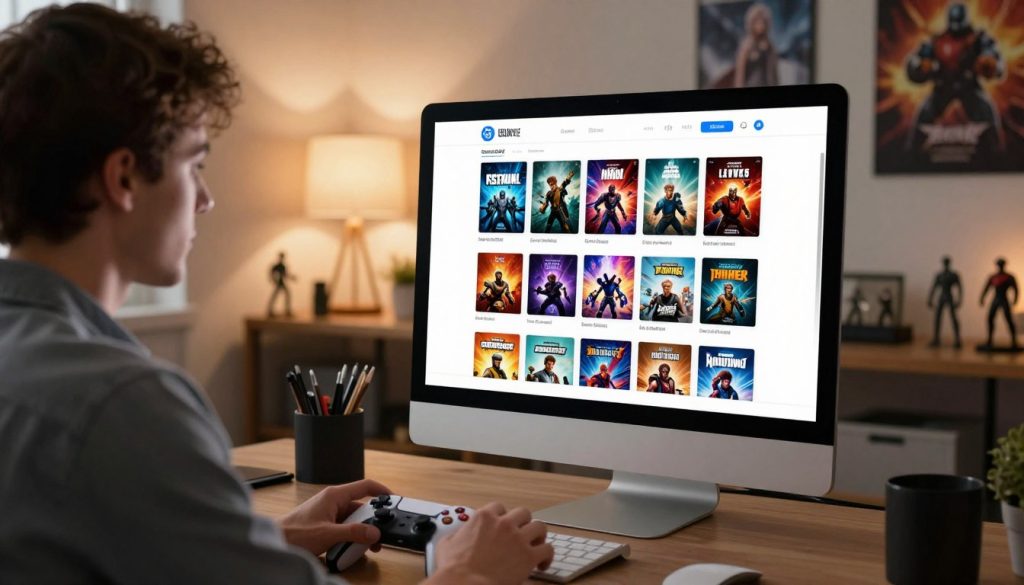
Organizing your digital game library is not just about keeping track of your games; it’s about enhancing your overall gaming experience. As gamers accumulate more titles across various platforms, effective management becomes crucial for a hassle-free gaming journey.
Account Security Best Practices
Securing your digital game library starts with protecting your account. Using strong, unique passwords for each gaming platform is essential. Enable two-factor authentication (2FA) whenever possible to add an extra layer of security. Regularly update your passwords and be cautious of phishing attempts to keep your account and games safe.
Monitoring your account activity is also crucial. Keep an eye on login history and game purchases to detect any unauthorized access. Most gaming platforms offer features to view recent activity and log out of unrecognized devices remotely.
Multiple Platform Management Strategies
Managing games across multiple platforms can be challenging. One effective strategy is to use a centralized library management tool that can track games across different platforms. This can help in keeping a unified view of your game collection and avoiding duplicate purchases.
Another strategy is to categorize your games based on genre, platform, or completion status. This makes it easier to decide what to play next and keeps your library organized. Some gamers also find it helpful to maintain a wishlist of desired games across platforms.
Backup and Recovery Options
Backing up your game saves and configurations is vital, especially for games that don’t sync automatically across devices. Use cloud storage or external drives to backup your game data. Some platforms, like Steam, offer built-in cloud saving features, while others may require third-party solutions.
In case of account or hardware failure, having a recovery plan is essential. Make sure you have recovery information up to date, including email addresses and security questions. Regular backups ensure that your progress is safe, and you can quickly recover your gaming state.
Troubleshooting Common Key Activation Issues
Despite the convenience of digital game keys, users often face activation issues that can be easily addressed with the right knowledge. Understanding the common problems and their solutions can save time and frustration.
Invalid or Already Used Keys
One of the most common issues is encountering an invalid or already used key. This can happen for several reasons, including purchasing from unauthorized resellers or keys being used more than once. To avoid this, it’s crucial to buy from authorized retailers and be wary of deals that seem too good to be true.
If you receive an error message stating that your key is invalid or has already been used, double-check that you’ve entered the key correctly. If the issue persists, contact the retailer for a replacement or refund, and consider reaching out to the game’s support team for further assistance.
Region Mismatch Problems
Region mismatch is another common issue where a game key is not compatible with your region. Game developers often release games in different regions at different times or restrict certain content based on geographical location. To avoid region mismatch problems, check the game’s region compatibility before making a purchase.
If you encounter a region mismatch error, you may need to wait for the game to be released in your region or look for alternative purchasing options that cater to your location.
Platform-Specific Error Messages
Sometimes, the issue might be specific to the gaming platform you’re using. Platform-specific error messages can occur due to various reasons such as server issues, account restrictions, or compatibility problems. Understanding the specific error message can help in diagnosing the issue.
For instance, if you’re trying to activate a key on Steam and encounter an error, checking the Steam community forums or support pages can provide insights into whether it’s a widespread issue or specific to your account.
Contacting Support for Resolution
If you’re unable to resolve the activation issue on your own, contacting the support team of the gaming platform or the retailer is the next step. Be prepared to provide details such as your game key, order number, and any error messages you’ve encountered.
Support teams can offer solutions ranging from providing a new key to troubleshooting account-specific issues. Keeping a record of your communication can be helpful in case you need to follow up on your issue.
The Economics of Digital Game Keys
The digital game key market operates within a complex economic ecosystem influenced by various factors including pricing strategies and reseller dynamics. This section delves into the economics of digital game keys, exploring how pricing strategies are formulated, the role of key resellers, and the overall impact on game developers and publishers.
Pricing Strategies and Regional Variations
Pricing for digital game keys is not uniform and varies significantly across different regions. This variation is largely due to factors such as currency exchange rates, local market conditions, and consumer purchasing power.
Game developers and publishers often adopt tiered pricing strategies to accommodate these regional differences, ensuring their products remain competitive in diverse markets.
How Key Resellers Obtain Lower Prices
Key resellers acquire digital game keys at lower prices through various means, including bulk purchases, exploiting regional price discrepancies, and leveraging special promotions or discounts.
These resellers then sell the keys at prices that are often lower than those offered by official retailers, attracting price-sensitive consumers.
Impact on Developers and Publishers
The activities of key resellers and the overall economics of digital game keys have significant implications for game developers and publishers.
While resellers can increase game visibility and attract more players, they can also reduce profit margins for developers and publishers, potentially affecting their revenue and ability to invest in future game development.
The Future of Digital Game Distribution
The digital game distribution landscape is on the cusp of a revolution, driven by emerging technologies and shifting consumer preferences. As we look to the future, several key trends and innovations are poised to reshape the industry.
The future of digital game distribution is being shaped by several emerging technologies and trends. These advancements promise to enhance the gaming experience, improve security, and offer more flexible access to games.
Blockchain and NFT Integration Possibilities
Blockchain technology and Non-Fungible Tokens (NFTs) are beginning to make their mark on the gaming industry. Blockchain offers a decentralized, secure way to manage game ownership and transactions. NFTs, on the other hand, allow for unique digital assets that can be bought, sold, and traded. The integration of these technologies could revolutionize how games are distributed and owned.
The use of blockchain and NFTs can provide players with true ownership of in-game assets, a concept that is currently limited in traditional gaming models. This shift could lead to new business models where players can buy, sell, and trade digital goods more securely and transparently.
Key benefits of blockchain and NFT integration include:
- Enhanced security through decentralized ledger technology
- True ownership of digital assets
- New revenue streams for developers through the sale and trade of NFTs
Cloud Gaming and Subscription Model Trends
Cloud gaming and subscription models are changing how gamers access and play games. Cloud gaming allows for high-quality gaming experiences on a variety of devices without the need for expensive hardware. Subscription services offer access to a vast library of games for a flat monthly fee, providing gamers with flexibility and value.
Services like Google Stadia and Microsoft xCloud are at the forefront of cloud gaming, offering seamless gaming experiences across different devices. Meanwhile, subscription models like Xbox Game Pass and PlayStation Now are gaining popularity, giving gamers access to a wide range of titles without the need for individual purchases.
Enhanced Security Technologies on the Horizon
As digital game distribution evolves, so too do the security measures designed to protect it. Emerging technologies such as advanced encryption methods, AI-driven anti-piracy tools, and more sophisticated DRM (Digital Rights Management) systems are being developed to combat piracy and ensure that games are distributed securely.
These enhanced security technologies will be crucial in protecting the intellectual property of game developers and publishers, ensuring that their work is not pirated or misused. Moreover, they will help in safeguarding player data and preventing fraud in digital transactions.
Conclusion
Understanding digital game keys is crucial for gamers who want to navigate the complex world of digital game distribution. Throughout this guide, we’ve explored how digital game keys work, from their generation and activation to the security measures that protect them.
The process of game activation involves verifying the key through server authentication protocols, ensuring that the game is legitimate and not pirated. This not only protects game developers and publishers but also provides a secure gaming experience for users.
As the gaming industry continues to evolve, it’s essential to stay informed about the latest developments in digital game keys and game security. By being aware of the potential risks and taking steps to mitigate them, gamers can enjoy their favorite games without worrying about security threats.
In conclusion, digital game keys play a vital role in the digital distribution of games, and their proper use is essential for a seamless gaming experience. By understanding how they work and the measures in place to secure them, gamers can appreciate the complexity and sophistication of modern game activation and security systems.
